Capiz shell crafts (Placuna placenta), commonly known as simping shells, have long been a favorite in the world of interior decoration. Their translucent light and pearl-like luster give a luxurious yet natural impression.
However, did you know that not all Capiz shell products are created equal? In the market, we often find significant price differences between local and export quality products. For collectors of decorations or home decor businesses, understanding these differences is very important.
The following are the main points that distinguish export-quality Capiz shells (Sabila Multi Kreasindo standard) from ordinary local quality :
- Thickness and Clarity of Raw Materials
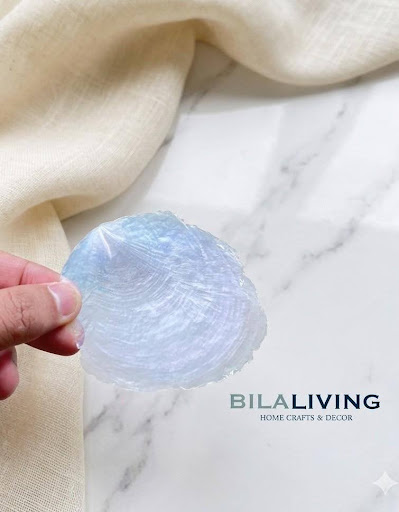
The first step in export standards begins with the selection of raw materials. Export quality uses shells that are mature enough to have consistent thickness and high transparency. Shells are strictly sorted to ensure there are no black spots or natural cracks that interfere with aesthetics. In contrast, domestic quality often uses a mixture of shells of various sizes and ages, so that the final result sometimes looks duller or has uneven thickness. - Cleaning and Odor Removal Process (Curing Process)
This is the difference most often noticed by consumers. Export quality is achieved through chemical cleaning and repeated washing to remove any remaining organic matter from the sea. As a result, standard export products do not smell fishy and are resistant to mold even when shipped in containers for months. Meanwhile, the cleaning process for local quality is sometimes less than optimal, so that in humid conditions, the products often give off an unpleasant sea smell. - Precision and Neatness of Workmanship
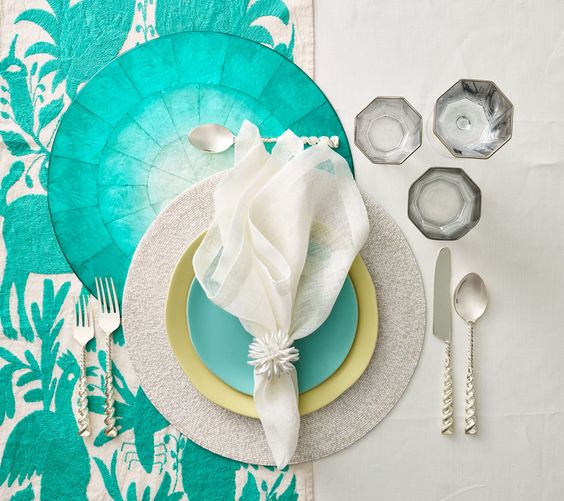
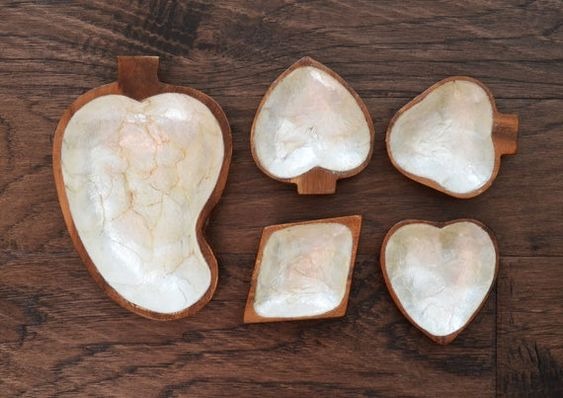
As a 100% handmade product, the skill of the craftsman is the determining factor. Export quality is achieved through the precision cutting of pieces (such as placemats or tissue boxes). The joints between the shells are neat, even, and smooth to the touch. The inner lining (such as wood or MDF) is also finished to perfection. In contrast, locally made products sometimes still have sharp corners, slightly messy glue, or asymmetrical shell arrangements. - Protective Layer Quality (Finishing & Coating)
The finish determines how long the product will last in your room. Export quality uses high-quality coatings that do not yellow easily and are resistant to fluctuating room temperatures. This keeps the natural luster of the shell intact for years. In contrast, local quality uses standard varnish that can peel or turn brown over time if exposed to constant sunlight. - Packaging Safety Standards
For the international market, packaging is not just a wrapper, but total protection. Standard export products must pass a drop test with packaging using thick styrofoam, bubble wrap, and standard export cardboard (double wall) to ensure that goods arrive intact in the hands of customers.
Choosing export-quality Capiz shells is not just about buying aesthetics, but about investing in durability and high-quality craftsmanship. At Sabila Multi Kreasindo, we are committed to bringing these international standards to every inch of the products we produce from the hands of local Magelang artisans for the world.
Contact Our Team:
WhatsApp: +62 856-2696-881
Email: sabilamultikreasindo@gmail.com.